Fábricas verificadas una a unaPrecio final con transporte, aduana e impuestosServicio técnico y garantía incluidos

Bakeries & pastry shops

A bakery is a chain: if the dough comes out of the mixer a degree warm, fermentation runs ahead, and the oven won't fix it. Equipping a bakery isn't buying separate machines, it's deciding where in that chain you want control and where capacity alone is enough.

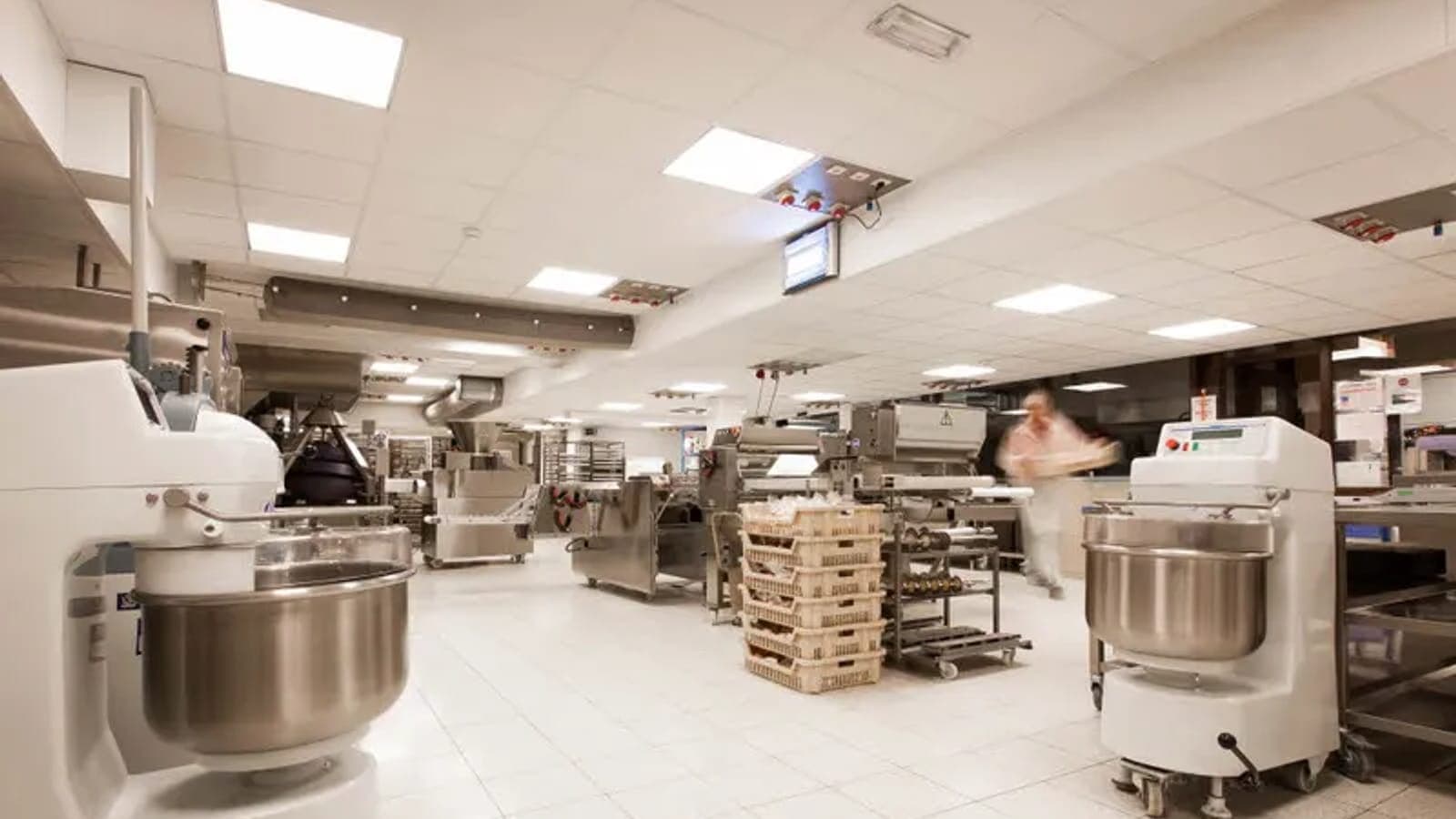
Here you'll find equipment for all six stages — mixing, shaping, proofing, baking, refrigeration and finishing — from factories that build for professional bakeries, with the final delivered price.

What equipment this sector uses

Mixing

The spiral is the standard for bread: the tool turns on its own axis while the bowl follows, so it develops gluten with little friction and raises dough temperature less. A planetary does a different job: creams, sponges, batters, and it takes attachments. If you make both bread and pastry, don't look for one machine that does both; look at which of the two stages is limiting you today.

Shaping

Dividers, rounders and moulders. What separates a good one from an average one isn't speed but how much it degrades the dough: every mechanical step breaks some of the structure you've just built in the mixer. On high-hydration doughs that difference shows up in the crumb.

Proofing

Controlled proofers and retarder-proofers. You aren't buying temperature here, you're buying a schedule: deciding when fermentation starts is what lets you bake early without starting in the middle of the night. Humidity control matters as much as degrees; without it the dough skins over before it reaches the oven.

Baking

A deck oven bakes by contact and thermal mass: it's what gives you crust and a proper base. Convection moves hot air, suits viennoiserie and puff pastry, and is more even across trays. A rack oven is about volume: the trolley rotates to compensate for a large oven's unevenness. Steam isn't a decorative extra — it shapes scoring, shine and crust.

Refrigeration

Blast chillers and dough storage. This is what turns daily production into production you can schedule.

Finishing

Sheeters, enrobers, depositors. This is where you decide whether the product can be reproduced identically every day or depends on who's in that morning.

How to choose

  1. 1

    Check which unit the capacity is quoted in

    Some manufacturers rate mixers in kilos of flour and others in kilos of dough, and the gap between the two figures is large. Before comparing two models, make sure they're talking about the same thing.

  2. 2

    Final dough temperature is a purchasing figure

    Mixing generates heat. How much your machine adds determines whether you'll need to control water, room or timings. It's the variable that most quietly ruins a production run and almost never enters the decision.

  3. 3

    The product picks the oven

    If you're making sourdough, convection won't give it to you however much steam you add. Decide what you sell first and the oven second; the other way round tends to mean buying twice.

  4. 4

    Look at the installation before the price

    A bakery is one of the most demanding premises for power: ovens, proofers and mixers all at once. Check your contracted supply and whether you need three-phase before committing to anything.

  5. 5

    Water is a consumable too

    Where water is hard, anything that generates steam suffers. If your area is, treatment isn't an accessory: it's part of the cost of the oven.

Frequently asked questions

Spiral or planetary?

Spiral if your volume is bread. Planetary if it's pastry. With both running, the question isn't which you buy but which of the two stages is holding your production back right now.

Deck or rack oven?

Deck for crusted products and batches baked differently per chamber. Rack when the problem is pushing volume and you want consistency across a full trolley. Many bakeries end up with both, and almost none start that way.

Is controlled proofing worth it in a small bakery?

It's the machine that changes the baker's life more than the bread: it moves the work out of the small hours. If your constraint is hours rather than quality, it's often the best buy in the building.

Do I need three-phase?

For most deck and rack ovens, yes. Check before buying: upgrading the supply can cost more than the difference between two models.

And if it breaks?

You open the case with us, not with the factory. LeanSupport explains the whole process.

Can't find the machine you're after?

Tell us what you need to solve and we'll find the factory.

Send an enquiry