Fábricas verificadas una a unaPrecio final con transporte, aduana e impuestosServicio técnico y garantía incluidos

Kitchen & restaurants

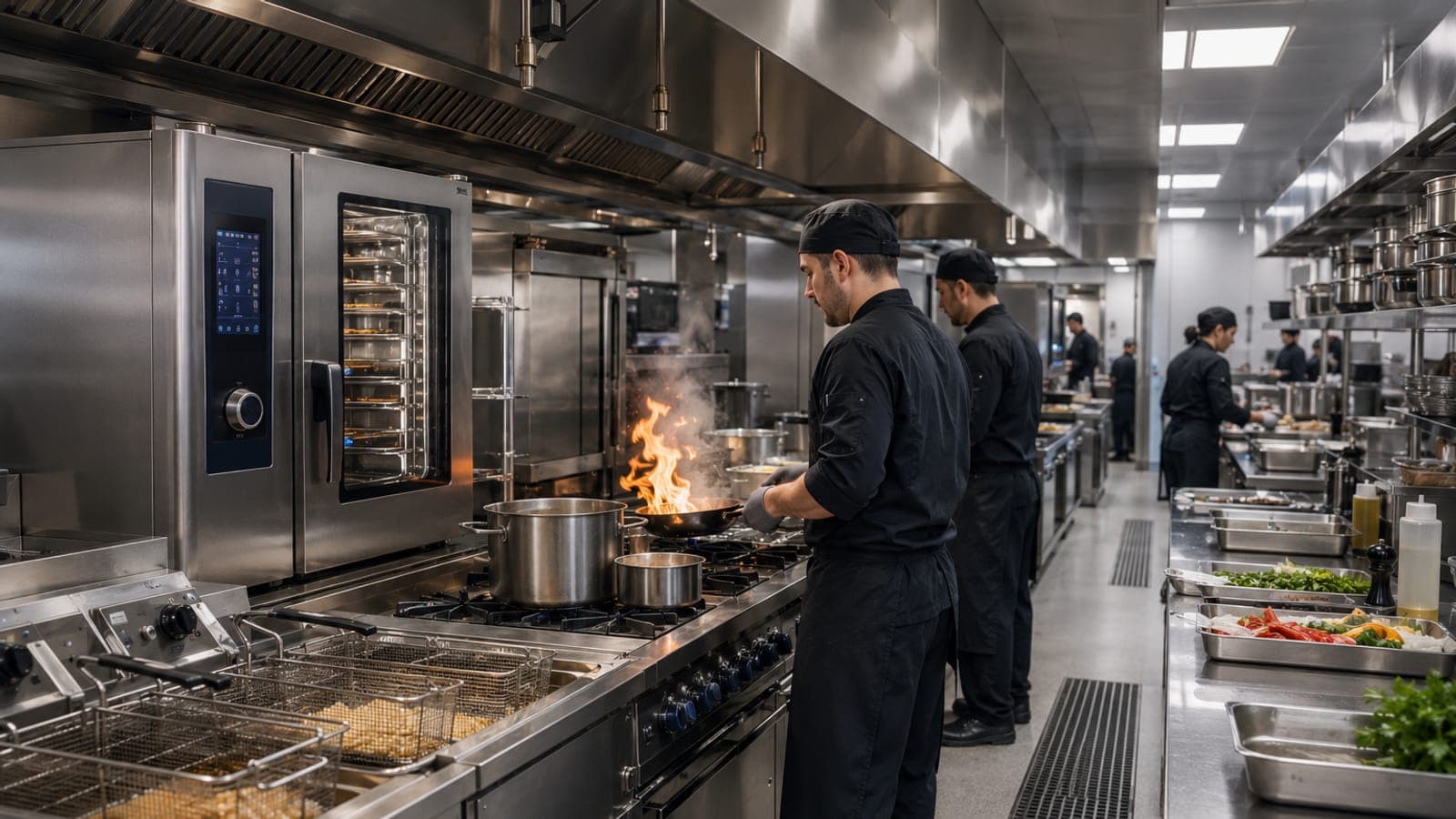
A kitchen isn't equipped for the menu you want, it's equipped for the service you'll run. Fifty covers packed into ninety minutes and fifty spread across an afternoon are two different kitchens even with the same menu. Restaurant, bar with a kitchen, dark kitchen, catering or canteen: they all cook, and almost none need the same thing.

Here you'll find cooking, preparation, warewashing and hot line from factories that build for professional catering, with the final delivered price.

What equipment this sector uses

Cooking

Burners, griddles, fryers, charcoal grills. This is the part everyone oversizes: people buy burners that never run at the same time. What actually decides it is how many simultaneous services you need at peak, not how many dishes the menu has.

Ovens

Convection moves hot air and is the standard for regenerating and baking on trays. A combi adds steam and humidity control, and with that it changes how work is distributed across the whole kitchen: it lets you cook at low temperature, regenerate without drying out, and programme cycles that don't need someone watching. It's the machine that most changes what the same team can put out.

Preparation

Peelers, vegetable cutters, cutters, blenders. This is where labour hours come back without touching plate quality. If your kitchen peels and chops by hand at volume, this is the most measurable saving in the place.

Warewashing

Glasswashers, hood dishwashers and rack conveyors. Warewashing is the invisible bottleneck: when service jams, often it isn't burners that are missing, it's clean crockery coming back. Look at the real cycle and, above all, at your water hardness.

Hot line and holding

Bains-marie, hot tables and display units, trolleys. This is the equipment for anyone serving buffet, set lunch or institutional catering: holding at temperature without drying the product is a different job from cooking it.

How to choose

  1. 1

    Size for the peak, not the day

    Count how many plates go out in the busiest hour and with how many pairs of hands. That number decides cooking and warewashing; the rest of the menu is rarely the constraint.

  2. 2

    Available energy outranks preference

    Gas, induction or electric isn't only a kitchen decision: it depends on your contracted supply, on whether you have three-phase and on whether the premises allow gas. Check what you can install before deciding what you want.

  3. 3

    Extraction dictates what you can fit

    The hood and its airflow limit which cooking equipment fits on that line. If you're changing cooking type, verify extraction with a technician before buying: it's the most common reason a machine goes back.

  4. 4

    A combi pays for itself in staffing, not on the invoice

    Its real advantage is that it frees hands and makes repeatable what today depends on who's on the section. If your problem is people rather than output, it's often the best buy in the kitchen.

  5. 5

    Count the daily cleaning

    Everything that strips down gets stripped down every night. A machine that cleans in two minutes and one that takes fifteen are two different labour costs multiplied by three hundred services.

Frequently asked questions

Gas or induction?

Induction is more efficient, heats the kitchen less and is more precise; gas is more flexible with pans and doesn't depend on electrical supply. The premises usually decide before the chef does: look at your contracted supply and whether you have a gas connection.

Combi or convection oven?

Convection if you bake and regenerate on trays and volume is contained. Combi if you want to cook main product, control humidity and programme cycles. The price step is real, and so is the return, but it arrives in kitchen hours, not on the ticket.

Which dishwasher do I need?

Count racks per hour at peak service, not crockery per day. And check water hardness before choosing: in a hard-water area, the softener determines the machine's service life.

Does a dark kitchen need the same equipment?

No. With no dining room the hot line and most of the crockery washing disappear, and the weight shifts to cooking, packing and refrigeration. It tends to be a smaller, more intense kitchen, not a reduced restaurant.

Can I set up a kitchen without an extraction hood?

It depends on the type of cooking and on local regulations. There is equipment with integrated extraction designed precisely for premises where ducting can't be fitted, but it's a technical and administrative check worth doing before buying, not after.

And if it breaks?

You open the case with us, not with the factory. LeanSupport explains the whole process.

Can't find the machine you're after?

Tell us what you need to solve and we'll find the factory.

Send an enquiry