Fábricas verificadas una a unaPrecio final con transporte, aduana e impuestosServicio técnico y garantía incluidos

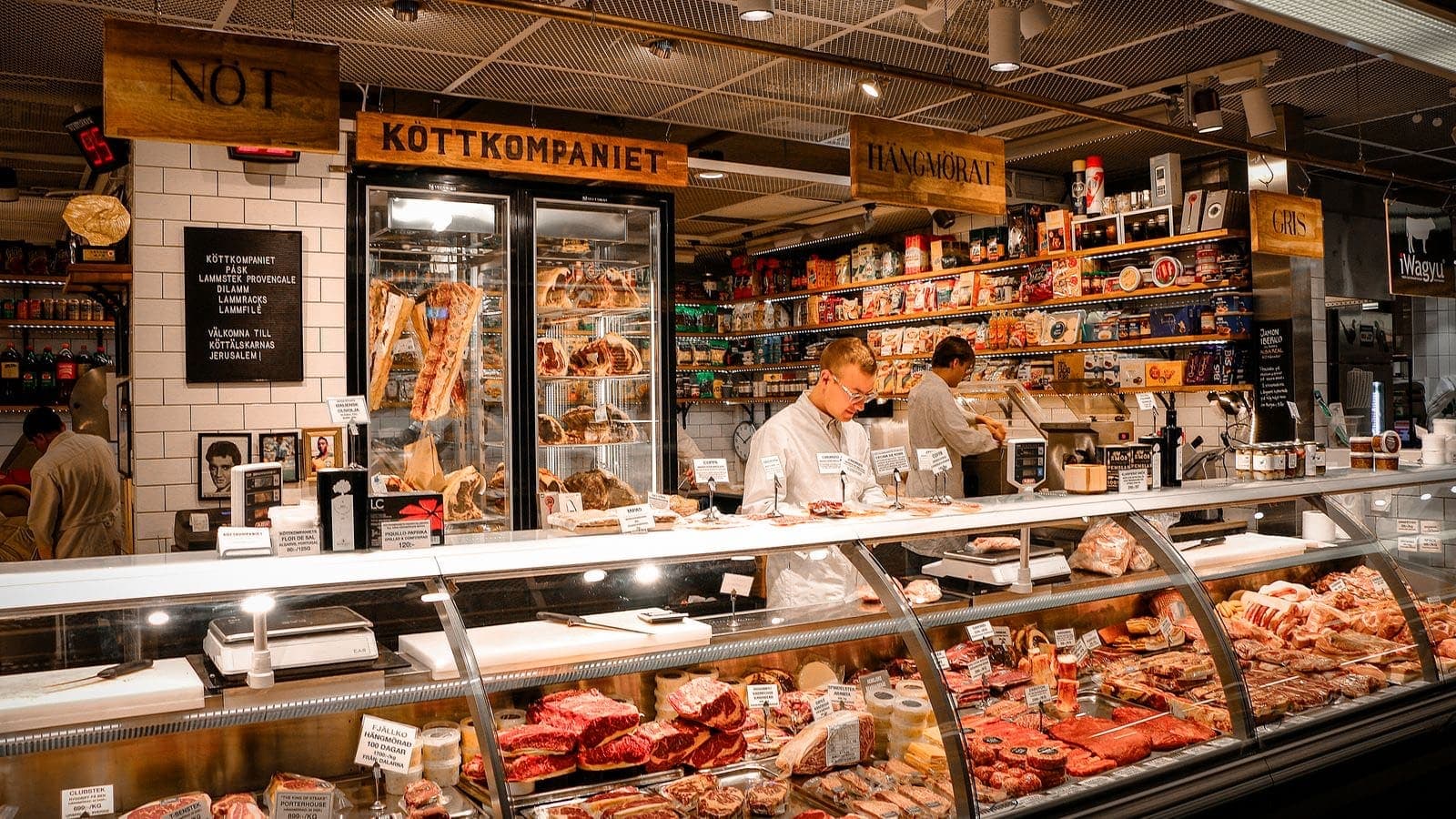
Butcheries & charcuterie

Between a butcher's that cuts and sells and a workshop that makes its own charcuterie there are three or four different businesses, and they all sit under the same sign. Some break down carcasses and work the counter, some make their own burgers and preparations, some cure and stuff, and some supply others. The equipment changes a lot; what doesn't change is that here the machine gets cleaned every day, and that weighs as much as what it produces.

Here you'll find everything from the refrigerated counter to a full processing line, from factories that build for professional butchery, with the final delivered price.

What equipment this sector uses

Display and counter

The refrigerated counter is the machine every butcher's has, whether they process or not. It's where the customer judges the meat before asking the price: temperature, humidity and light decide whether it looks fresh or tired by mid-morning. What to look at is how it behaves with the counter open and full, not empty.

Cutting

Band saws for bone, slicers for cured meats, and the block. The saw is what most determines the cuts you can offer without depending on your supplier; the slicer decides whether slicing comes out even or ragged, which in charcuterie shows up in sales.

Mincing

The mincer works more hours than anything else in a butcher's that processes. There are plain ones and ones with a built-in mixer, which saves a whole step when you make preparations. Look at the cutting system, because it determines which knives and plates you'll be able to buy for years to come.

Mixing

For preparations, burgers and sausage mixes. Homogenising properly isn't cosmetic: it determines binding and how the product behaves afterwards.

Stuffing and forming

Sausage stuffers and burger formers. What separates a good machine here is how much it mistreats the mix: poorly controlled pressure breaks the emulsion, and that shows in the final texture.

Cold storage

The cold room or reserve cabinet is the refrigeration your customer never sees, and it holds most of your stock. It works with the door shut and fully loaded, the opposite of the display counter, so it gets chosen differently: what matters is that it absorbs a day's intake without the temperature climbing. Keeping sales cold separate from storage cold is what stops opening the counter from warming your whole stock.

How to choose

  1. 1

    Start with where your process ends

    Cutting and selling, making preparations, or curing and stuffing are three very different levels of investment. You don't have to climb them all: there are excellent butchers who process nothing and live on their cutting and their counter.

  2. 2

    Count stripping down as a cost

    These machines are cleaned daily, and some after every product type. A mincer that strips in two minutes and one that takes fifteen are two different labour costs multiplied by three hundred days.

  3. 3

    Check the spares before the brand

    Knives, plates and augers are real consumables. Before deciding, check the cutting system is one you'll find parts for without depending on a single supplier.

  4. 4

    Shrinkage eats the margin before price does

    Meat loses weight and loses presence, and both come straight out of the margin. Before you compare machine prices, check whether your storage cold keeps up: it decides how much of what you buy you sell as you bought it.

  5. 5

    Add up the power and look at the floor

    Saw, mincer and cold room at once is a consumption peak. And heavy equipment dictates where it can go: check access and working space around it before buying.

Frequently asked questions

Can I open a butcher's without a processing room?

Yes, and it's the most common way to start. With a refrigerated counter, a cold room and cutting equipment you have a complete business. Processing gets added when there's demand to justify it, not the other way round.

Which mincer do I need?

It depends on how many kilos you do in one run, not per day. A small machine forced through long runs heats up and damages the product; an oversized one has only cost you money. Think about your largest regular batch.

Is a mincer with a mixer worth it?

If you make preparations or burgers regularly, yes: it saves moving product to another machine and one handling step. If you mince mostly for fresh sale, you won't use it.

Do I need registration to make and sell my own charcuterie?

Requirements depend on what you make, whether you sell only on your premises or also to third parties, and on your region. Check with your local authority before sizing the workshop: the answer shapes the installation, not just the paperwork.

Is a band saw worth it if I buy pre-cut?

If you always work with boned cuts, no. As soon as you want to offer bone-in cuts, rib racks or adapt to what the customer asks for, it's the machine that gives you that freedom from your supplier.

And if it breaks?

You open the case with us, not with the factory. LeanSupport explains the whole process.

Can't find the machine you're after?

Tell us what you need to solve and we'll find the factory.

Send an enquiry